
How to Tell If a Car Radiator Is Leaking
Last Updated: November 7, 2026
Quick Summary
Look for green, orange, or pink fluid puddles under the front of the car, a coolant level that keeps dropping, a rising temperature gauge, a sweet smell after parking, or crusty residue around the radiator and hoses. To check how to tell if a car radiator is leaking, wait until the engine is cool, then inspect the reservoir and seams.
Look for puddles of green, orange, or pink fluid under the front of the car.
A coolant level that keeps dropping signals a likely leak.
Never open the radiator cap on a hot engine; hot coolant can cause serious burns.
Stop driving right away if the engine overheats, since continuing can warp the engine.
Table of Contents
Your radiator is a quiet workhorse, but knowing how to tell if a car radiator is leaking matters, because the warning signs are easy to miss until the engine runs hot.
Signs Your Car Radiator Is Leaking
Knowing how to tell if a car radiator is leaking usually comes down to a few clear signs:
Puddles of green, orange, or pink fluid under the front of the car
A coolant level that keeps dropping
The temperature gauge climbing toward hot, or a dash warning light
A sweet smell after you park
Crusty residue around the radiator, hoses, or cap
If you see more than one, act soon, coolant loss can overheat the engine in minutes.
Watch out: Never open the radiator cap on a hot engine. Hot coolant can spray out and cause serious burns.
The most common warning signs of a leaking radiator are summarised below.
Sign | What it looks like | Action |
Fluid puddles | Green, orange, or pink fluid under the front of the car | Act soon |
Falling coolant level | Level keeps dropping | Check the reservoir |
Rising temperature | Gauge climbs toward hot, or a dash warning light | Stop driving if overheating |
Sweet smell | Odour after you park | Look for leaks |
Crusty residue | Buildup around radiator, hoses, or cap | Inspect the seams |
How to Check for a Radiator Leak Safely at Home
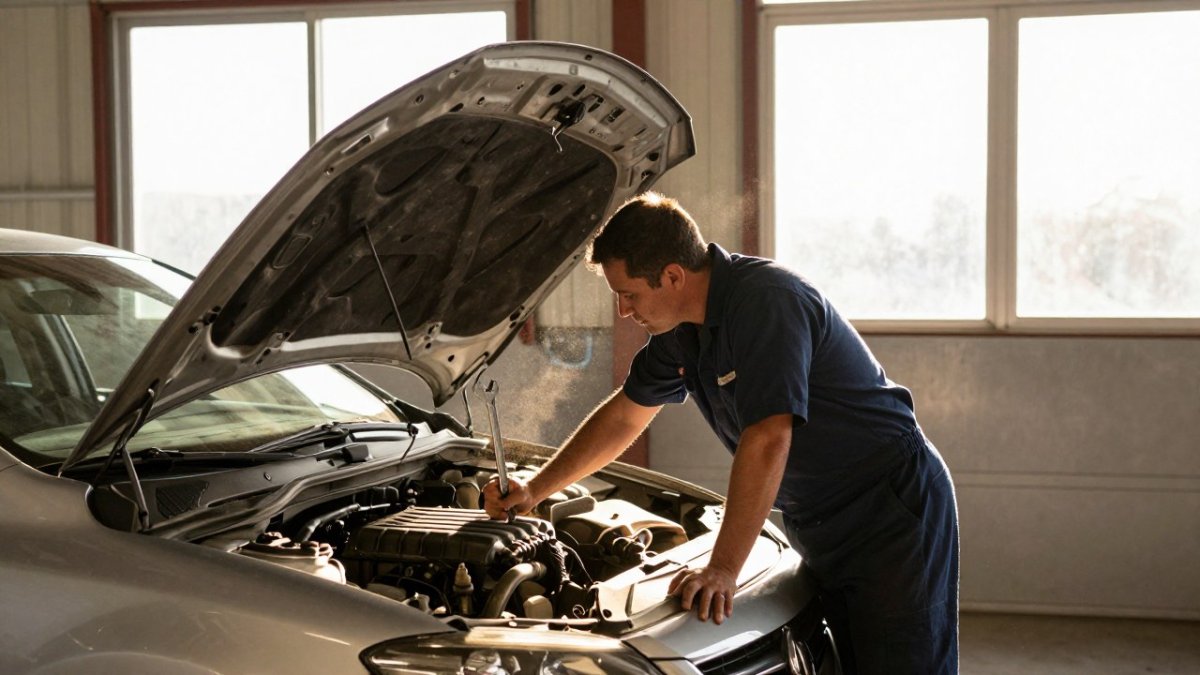
Wait until the engine is cool. Park on level ground, put on gloves, and open the hood.

Check the coolant reservoir against the marked lines.
Look under the car for fresh drips after overnight parking.
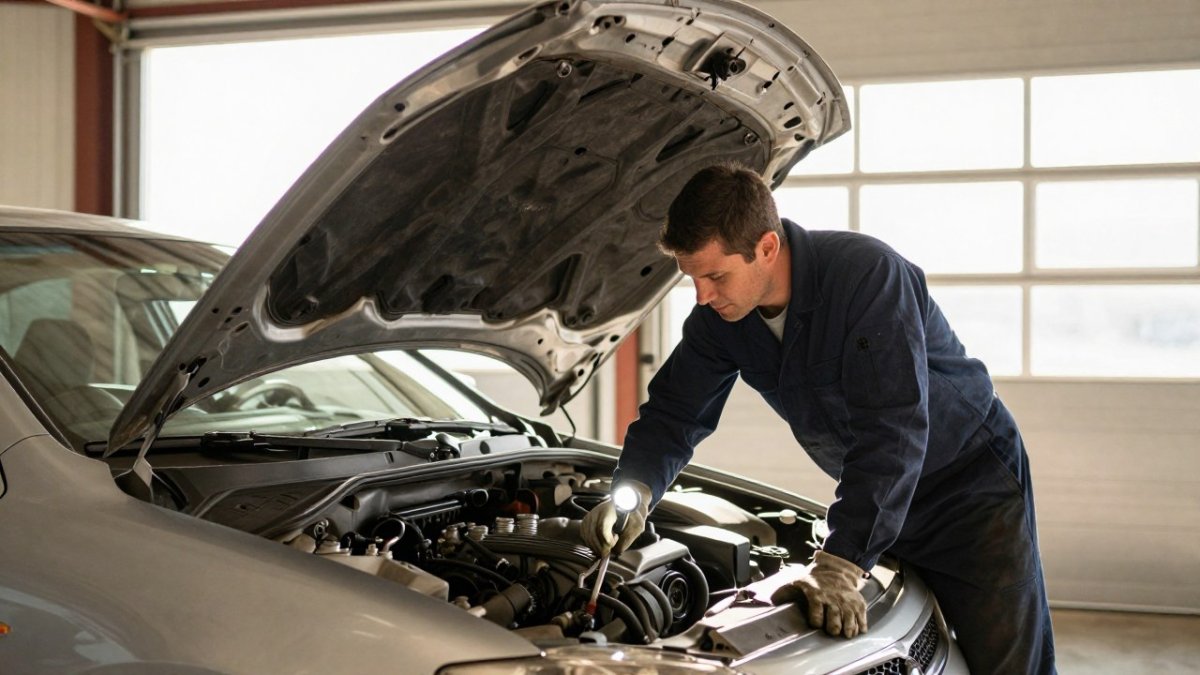
Trace hoses and radiator seams with a flashlight for wet spots or crusty buildup.
Note where the leak appears and how fast the level drops.
Can I Drive If My Radiator Is Leaking, and What It Costs to Fix
Driving with a radiator leak is risky. Short trips with a small drip may be possible only if you top off coolant often and watch the temperature gauge. Stop driving right away if the engine overheats, continuing can warp the engine and turn a small repair into a costly one.
Repair cost depends on the failed part and the labor to reach it. Pricing depends on the vehicle and the specific repair, so contact Freeway Muffler through our website for a current quote. You can also review the full range of auto repair services we offer, including cooling system work.
Freeway Muffler offers after-hours drop-off through a locked key box. Call or visit our site to schedule an inspection.
Frequently Asked Questions
What are the early signs that my car's radiator is leaking?
The earliest signs are a sweet-smelling puddle under the front of the car, a coolant reservoir level that keeps dropping between top-offs, and a faint white or crusty residue on the radiator, hoses or cap. Coolant is often green, orange or pink and feels slightly slimy. If the temperature gauge climbs higher than normal or the temperature warning light comes on, stop driving as soon as it is safe and have the cooling system checked before adding more coolant.
Can I still drive if my radiator is leaking?
Driving with a radiator leak is risky. Even a slow leak can drop coolant below the level needed to keep the engine cool, and overheating can warp the cylinder head or damage the head gasket. If you must move the car, check the coolant level only when the engine is cold, top up with the correct coolant type, keep an eye on the temperature gauge, and get the vehicle to a repair shop promptly. Do not drive if the gauge is in the red.

Comments